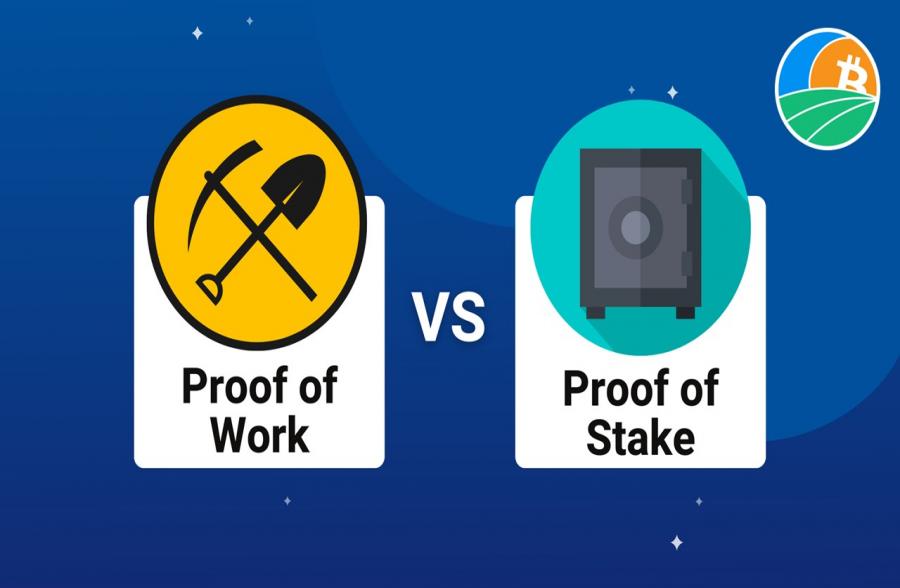
What is the difference between Proof of Work vs Proof of Stake
2024-01-25 08:29:26
Proof of Work (PoW) and Proof of Stake (PoS) are two consensus mechanisms used in blockchain networks to achieve agreement on the state of the blockchain. Here are the key differences between Proof of Work and Proof of Stake:
-
Consensus Mechanism:
- Proof of Work (PoW): In PoW, participants (miners) solve complex mathematical puzzles to validate transactions and create new blocks. The first miner to solve the puzzle broadcasts the solution to the network, and if it's correct, the new block is added to the blockchain, and the miner is rewarded with new cryptocurrency coins.
- Proof of Stake (PoS): In PoS, validators are chosen to create new blocks and validate transactions based on the amount of cryptocurrency they hold and are willing to "stake" as collateral. Essentially, participants with a higher stake have a higher chance of being chosen to create a new block and validate transactions.
-
Resource Consumption:
- Proof of Work (PoW): PoW requires a significant amount of computational power and energy consumption. Miners compete to solve complex puzzles, and this process is often referred to as "mining." The energy-intensive nature of PoW has led to environmental concerns in some cases.
- Proof of Stake (PoS): PoS is considered more energy-efficient compared to PoW since it doesn't involve the extensive computational work associated with solving puzzles. Validators are chosen based on the amount of cryptocurrency they hold, reducing the need for vast amounts of computational power.
-
Security:
- Proof of Work (PoW): PoW is known for its security due to the significant computational effort required to alter the blockchain's history. A malicious actor would need to control more than 50% of the network's computational power (51% attack) to manipulate the blockchain, making it economically infeasible.
- Proof of Stake (PoS): PoS relies on the economic incentive of validators to act honestly. Validators are required to put up a stake as collateral, and if they validate fraudulent transactions, they risk losing their staked assets. The security of PoS is based on the assumption that validators have a strong economic interest in maintaining the integrity of the network.
-
Centralization:
- Proof of Work (PoW): PoW mining operations can be centralized in regions with cheap electricity and access to specialized mining hardware. This can lead to concerns about centralization of mining power.
- Proof of Stake (PoS): PoS is often considered to have the potential for a more decentralized network, as validators are chosen based on the amount of cryptocurrency they hold rather than computational power.
-
Block Rewards:
- Proof of Work (PoW): Miners in PoW are rewarded with newly created cryptocurrency coins and transaction fees for successfully mining a new block.
- Proof of Stake (PoS): Validators in PoS are typically rewarded with transaction fees rather than newly created coins. Validators may also receive a portion of the transaction fees as a reward for their services.
It's worth noting that there are variations and hybrid models that combine elements of both PoW and PoS to address different challenges and optimize certain aspects of consensus mechanisms.
Send your comments